
Helyszín: Taets Art & Event park, Amsterdam, Hollandia
Half of the world's population lives in cities, a proportion that is expected to increase to 68% by 2050. As our urban ecosystems grow ever larger, technology has the potential to dramatically improve the lives of those living in them. With the onset of digitalization and the Fourth Industrial Revolution radically changing how we live, work and interact, the biggest impact will be felt on our cities. | ||||||||||||
Accurate geospatial information helps governments design better cities, improve public services and engage with citizens. Urbanization of the future will be driven by geospatial data and location would be a crucial component in digital cities. And as cities get smarter, much of this location data has to be in real time. This is where geospatial and 5G converge. 5G and geospatial will together be powering cities of the future | ||||||||||||
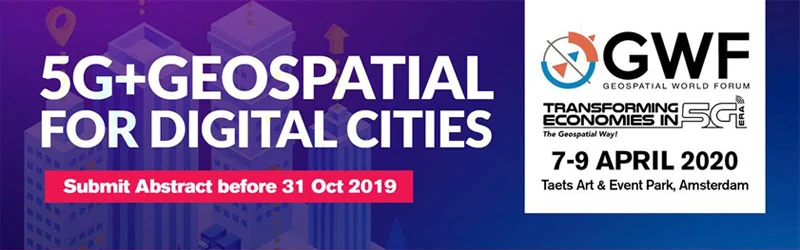
GWF 2020, scheduled for7-9 April in Amsterdam, will host a 2-day program on5G+Geospatial for Digital Citiesto discuss the convergence of 5G and geospatial that will empower cities of the future.
| ||||||||||||
|
|
|